
Decorative Concrete Options for Vestavia Hills Homes
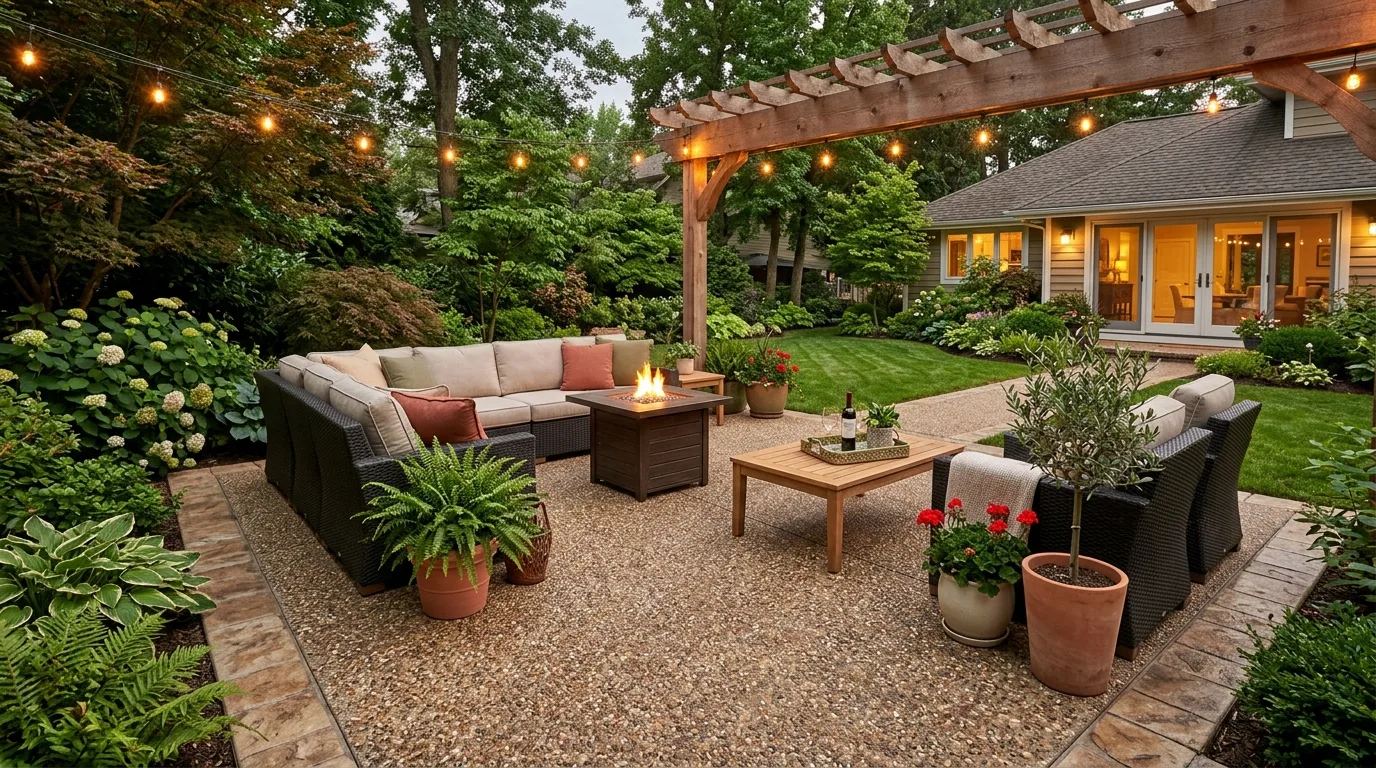
Plain gray concrete does the job, but Vestavia Hills homeowners increasingly want outdoor surfaces that do the job and look good doing it. Decorative concrete gives you the durability of concrete flatwork with the visual appeal of natural stone, brick, or wood — but the options aren’t all created equal, and not every decorative finish performs equally well in Alabama’s climate. In this post, we compare the main decorative concrete options available in Vestavia Hills: stamped concrete, exposed aggregate, stained and colored concrete, and concrete overlays.
Decorative Concrete Estimates in Vestavia Hills
We'll walk you through every option and recommend what works best for your specific project.
Why Decorative Concrete Makes Sense in Vestavia Hills
Vestavia Hills’ property values and community aesthetics support investment in quality exterior finishes. The community’s proximity to Mountain Brook — where outdoor living and curb appeal are taken seriously — influences what homeowners in neighborhoods like Liberty Park and the original Vestavia area expect from their driveways and patios.
Decorative concrete offers a specific advantage in Vestavia Hills that natural stone and pavers don’t: it’s a monolithic slab. Jefferson County’s expansive clay soils cause individual paver units to shift and settle over time as the clay beneath them cycles through wet and dry seasons. A decorative concrete slab, installed on an engineered gravel sub-base with adequate reinforcement, moves as a unit rather than losing individual stones to clay movement. Over a 20–30 year lifespan on Vestavia Hills terrain, decorative concrete consistently outperforms pavers for long-term appearance maintenance.
Stamped Concrete
Stamped concrete is the most popular decorative option for Vestavia Hills patios and pool surrounds, and for good reason — the range of available patterns is wider than any other decorative finish, and the visual results when done correctly are striking. Patterns include ashlar slate, cobblestone, brick, random stone, wood plank, and custom designs.
The Vestavia Hills-specific consideration for stamped concrete is the sealing and maintenance requirement. Alabama’s UV intensity degrades acrylic sealers on stamped concrete faster than in northern states — expect to reseal every two to three years rather than every three to five. Without regular resealing, color fades and the stamped texture loses definition as the surface layer erodes. This is not a reason to avoid stamped concrete installation; it’s a maintenance requirement to plan for.
Cost: $8–$15 per square foot installed for stamped concrete. Resealing: $0.50–$1.50 per square foot every two to three years.
Exposed Aggregate Concrete
Exposed aggregate concrete has a more natural, textured appearance than plain concrete flatwork — the decorative aggregate (pebbles, crushed stone, or specialty stone) is visible at the surface, creating texture and visual interest without the formwork and coloring requirements of stamped work. The exposed surface is also slightly more slip-resistant than smooth-troweled concrete, which makes it appropriate for pool surrounds and covered entry areas.
The exposure process involves washing the surface of the fresh concrete before initial set to remove the cement paste from the top layer, revealing the aggregate beneath. The type, color, and size of aggregate determine the final appearance. Local aggregate options that complement Vestavia Hills’ landscape include Tennessee River pebbles (smooth, mixed-earth tones), granite chip (gray/silver for a more modern look), and quartz crystal aggregate for a high-end sparkle finish.
Cost: $8–$10 per square foot installed. Exposed aggregate concrete resurfacing (applying exposed aggregate overlay to existing concrete) runs $5–$8 per square foot.
Stained and Colored Concrete
Integral color: Pigment added to the concrete mix before the pour. Produces consistent color through the full depth of the slab — the color doesn’t wear away even if the surface is abraded. Integral colors are available in a wide earth-tone palette: buffs, tans, brick reds, and warm grays work particularly well with Vestavia Hills’ landscape aesthetics. More durable color retention than surface-applied stain but less dramatic than multi-color stamped work.
Acid stain: A reactive chemical stain applied to existing or new concrete that produces a variegated, translucent color effect that enhances the concrete’s natural character. No two acid-stained surfaces look exactly alike — the reaction depends on the concrete’s mineral content and age. Produces organic, naturalistic color variation rather than uniform color. Requires sealing and periodic maintenance.
Water-based stain: Non-reactive stain that penetrates the concrete surface without chemical reaction. More predictable and consistent color results than acid stain. Wider color palette. Less durable than acid stain without proper sealer maintenance.
Hardener-based color: Color hardener broadcast onto the surface of fresh concrete before finishing, then sealed. Widely used in stamped concrete installation to achieve the primary slab color. Can also be used without stamping for a solid-color concrete flatwork surface.
Cost: Integral color adds $1–$3 per square foot to standard concrete flatwork. Acid staining of existing concrete runs $3–$5 per square foot. Water-based staining runs $2–$4 per square foot.
Concrete Overlays and Resurfacing
Concrete overlays allow homeowners with existing concrete slabs in sound structural condition to upgrade the surface appearance without full demo and replacement. The existing concrete is prepared (cleaned, any cracks filled), and a polymer-modified concrete overlay is applied at 1/4 to 3/8 inch thickness. The overlay can be stamped, textured, or left smooth depending on the desired finish.
Concrete resurfacing with an overlay is appropriate when: the underlying slab is structurally sound, drainage is adequate, and the issue is purely aesthetic (surface scaling, discoloration, or appearance upgrade). It is not appropriate when: the slab has structural cracks, significant settlement, or drainage failures — these problems need to be corrected at the slab level before any overlay is applied.
For Vestavia Hills homeowners with 20–30 year old patios or driveways that are structurally sound but aesthetically dated, concrete resurfacing with a decorative overlay is often more cost-effective than full replacement. Cost: $5–$8 per square foot for standard overlay. Stamped overlay runs $8–$12 per square foot.
Which Decorative Concrete is Right for Your Vestavia Hills Project?
Let us evaluate your existing concrete and recommend the right decorative option for your budget and goals.
Frequently Asked Questions
What decorative concrete finish lasts longest in Alabama?
Integral-color concrete with a penetrating sealer maintains its appearance longest in Alabama’s climate because the color is through the full depth of the slab — UV degradation can’t fade color it can’t reach. Stamped concrete with regular sealer maintenance (every two to three years) runs a close second in appearance retention. Exposed aggregate is durable but more prone to surface degradation over decades without sealing. Acid stain is beautiful but requires more maintenance attention to maintain its appearance in Alabama’s UV environment.
Can I add decorative finish to my existing Vestavia Hills driveway without replacing it?
Yes, if the existing slab is structurally sound. Concrete resurfacing with a decorative overlay, staining, or exposed aggregate overlay can transform the appearance of a structurally sound existing slab. If the slab has significant cracking, settlement, or drainage issues, those must be corrected first. We assess existing concrete slabs during estimate visits and tell you honestly whether an overlay will hold long-term or whether replacement is the better investment.
How often does decorative concrete need maintenance in Vestavia Hills?
Sealing is the primary maintenance requirement for all decorative concrete in Vestavia Hills. Alabama’s UV intensity requires resealing every two to three years — shorter intervals than many northern markets. Signs that resealing is needed include color fading (on stamped or stained surfaces), water no longer beading on the surface, and surface dullness where gloss sealers are used. Beyond sealing, decorative concrete requires the same maintenance as standard concrete: prompt crack repair and drainage management.
Vestavia Hills Decorative Concrete — Installed and Sealed Right
Call (888) 376-0955 for a free decorative concrete consultation. Stamped, exposed aggregate, stained — we do it all.
Related: