
Best Time to Pour Concrete in Vestavia Hills
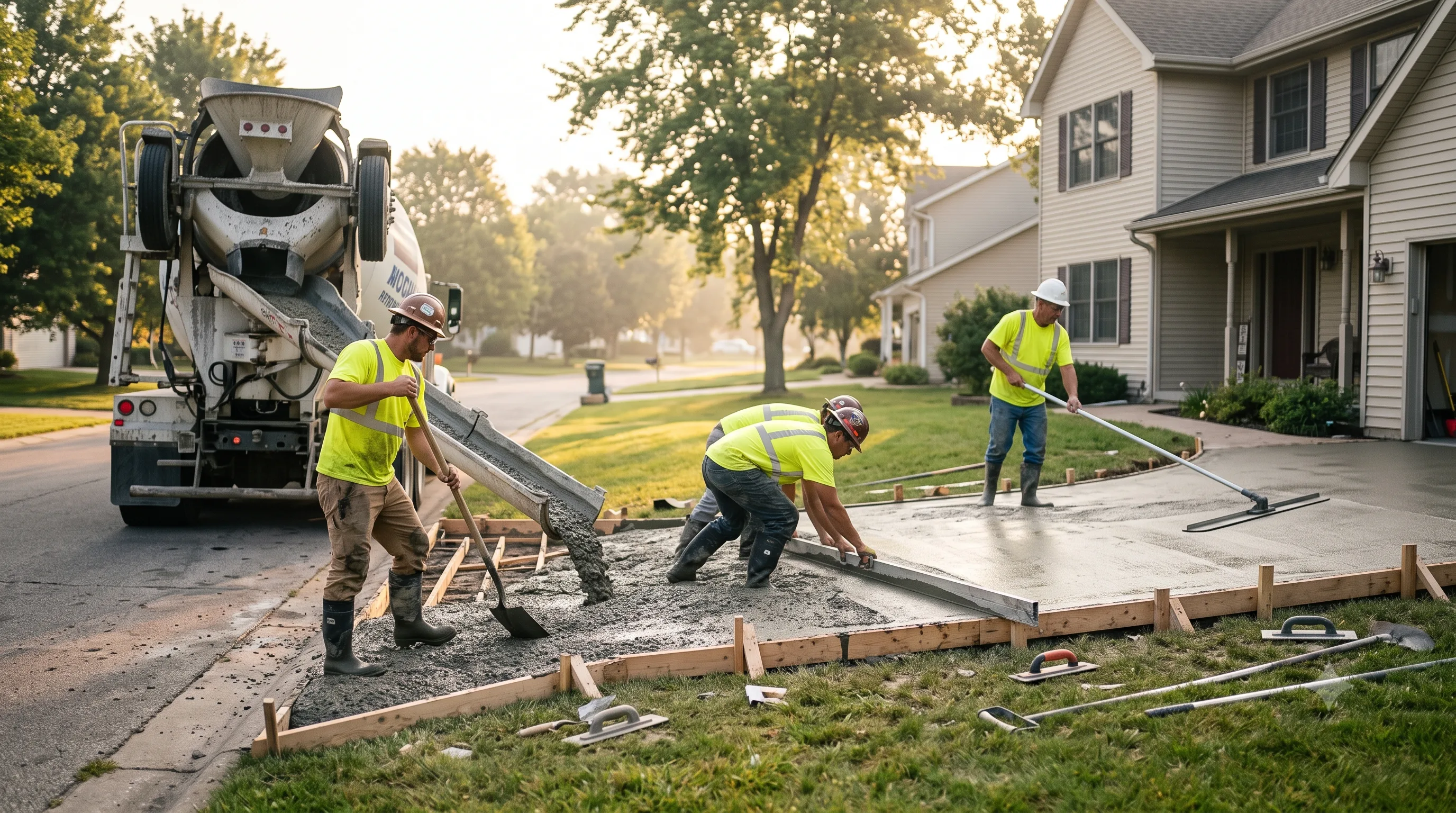
Timing matters more for concrete than most homeowners realize. The best concrete poured in the wrong season can fail before a less ideal mix poured in optimal conditions. Vestavia Hills’ humid subtropical climate creates clear windows when concrete curing is reliable — and clear windows when it isn’t. In this post, we walk through what Alabama’s seasonal conditions mean for concrete installation in Vestavia Hills, when to schedule, and how we handle off-season pours when your project can’t wait.
Schedule Your Vestavia Hills Concrete Project
We'll match your timeline to the right seasonal approach — free estimate and scheduling consultation.
Why Seasonal Timing Affects Concrete Vestavia Hills Pours
Concrete cures — it doesn’t dry. The chemical hydration reaction that hardens concrete requires moisture and happens at a rate that’s heavily temperature-dependent. When that reaction happens too fast (summer heat) or too slow (winter cold), the concrete structure that results is weaker and more prone to early cracking than concrete cured under ideal conditions.
In Vestavia Hills, the culprits are well-established. July averages 81°F — but afternoon highs regularly reach the low 90s, and concrete flatwork in direct sun can reach surface temperatures 20–30°F above air temperature. At those surface temperatures, moisture evaporates from concrete faster than the cement can hydrate, which creates plastic shrinkage cracks before the slab has even set. These cracks are permanent — no amount of later treatment eliminates them.
Winter brings the opposite problem. Below 40°F, hydration slows dramatically; below freezing, it stops entirely and fresh concrete can be permanently damaged by ice formation within the slab. Vestavia Hills doesn’t freeze frequently — January averages 44°F — but cold snaps below 32°F occur several times each winter and require cold-weather concrete protocols if a pour is scheduled.
Jefferson County’s wettest months — March (5.79”) and July — also affect scheduling. Saturated subgrade from March rains delays excavation and grading on clay soils. July rain can interrupt the concrete pouring sequence if not planned around. The permit process through the City of Vestavia Hills doesn’t depend on season, but planning permit lead time into your project schedule is important regardless of when you pour.
Season-by-Season Guide for Vestavia Hills Concrete
Spring (March–May): The optimal primary window. Temperatures between 50°F and 80°F allow the hydration reaction to proceed at the ideal rate. Concrete flatwork poured in spring cures slowly enough to develop maximum strength while retaining moisture naturally. The main complication is March’s heavy rainfall, which can delay excavation on clay soils that retain water. April and May are the best months within this window — soil has typically drained from spring rains, temperatures are mild, and the summer heat hasn’t arrived.
Summer (June–September): Manageable with the right approach. Temperatures above 90°F in July and August require active evaporation management: early-morning pour scheduling (before 8 AM to avoid peak heat), ice in the concrete mix water to lower mix temperature, curing blankets or evaporation retarder applied immediately after finishing, and additional curing time before any traffic. Most summer pours can be successfully executed with these protocols — but the crew skill and planning requirements are higher than in spring or fall. This is when concrete installation experience in Alabama’s climate matters most.
Fall (September–November): The second optimal window, and often preferred for its more consistent dry-weather stretches. September temperatures are still warm enough for good curing, while October and November bring the 50°F–70°F range ideal for concrete work. Fall also tends to have better contractor availability than spring (the busier season) and more consistent dry spells for sequential project phases. Off-peak scheduling (late fall through winter) typically comes with shorter lead times and sometimes competitive pricing as demand drops.
Winter (December–February): Possible with precautions. Vestavia Hills rarely sees sustained subfreezing weather, but cold snaps require concrete mix additives (calcium chloride accelerator), insulated curing blankets, and sometimes heated enclosures for the curing period. The additional materials and labor add cost. For non-urgent projects, winter is best avoided unless project timelines require it. For time-sensitive projects — foundation pours for construction schedules, for example — winter concrete work is entirely feasible with proper planning.
What Summer Heat Does to Vestavia Hills Concrete Installations
Summer concrete installation in Vestavia Hills is the situation that separates experienced local contractors from those without Alabama-specific knowledge. When concrete surface temperature exceeds 90°F, the moisture in the fresh mix evaporates faster than the cement paste can consume it during hydration. The result is plastic shrinkage cracking — a network of fine cracks that appears within the first few hours of the pour before the concrete is even hard.
Preventing plastic shrinkage cracking in Vestavia Hills’ summer conditions requires a coordinated approach: lower the concrete’s initial temperature using chilled mix water, pour during the coolest part of the day, maintain large enough crews to stamp and finish quickly, and apply evaporation retarder immediately after screeding and before final finishing. Curing blankets deployed immediately after the pour seal in moisture for the critical first 24–48 hours.
Year-Round Concrete Pours in Vestavia Hills
We adapt our approach to the season — summer heat, winter cold, whatever your timeline requires.
Homeowners in Cahaba Heights and Liberty Park who’ve scheduled summer concrete driveway installations with contractors unfamiliar with Alabama’s conditions have seen the results: a surface full of hairline cracks visible within the first summer. These cracks widen over time as thermal expansion cycles work on them. Proper summer pour management prevents this entirely.
Practical Scheduling Recommendations
- Driveways and patios: Target April–May or September–October for best curing conditions. Summer works with experienced crews; winter requires additives.
- Retaining walls and foundations: Spring and fall are optimal — structural pours benefit from extended moderate-temperature curing periods.
- Stamped concrete projects: Spring and fall are strongly preferred. The decorative stamping window is much shorter in summer heat, and the risk of incomplete pattern impressions is significantly higher above 85°F.
- Concrete repair and resurfacing: Fall through spring is ideal — repair mortars and overlay materials are sensitive to both summer heat and winter cold. Most crack fills can be done year-round.
Frequently Asked Questions
Can concrete be poured in Vestavia Hills’ summer heat?
Yes, with proper management. Early-morning scheduling, cooled mix water, sufficient crew size, evaporation retarder, and immediate curing blanket deployment all contribute to a successful summer pour. Our crews are experienced with Alabama summer conditions — we don’t cancel summer pours, we plan for them.
What happens if it rains right after my concrete is poured?
Rain on fresh concrete is a problem — water dilutes the surface layer and weakens it while disrupting the finish. We monitor weather forecasts before every pour and have contingency planning for approaching rain. If rain arrives before the concrete reaches initial set, we cover it immediately. If the forecast shows significant rain within six hours of pour time, we reschedule. We don’t pour concrete into the path of confirmed rainfall.
Does the time of year affect concrete pricing in Vestavia Hills?
Fall and winter pours typically come with better contractor availability and sometimes lower pricing as demand drops from the busy spring and summer season. Summer pours don’t necessarily cost more, but require more careful scheduling. Spring is the busiest season — book early for April and May project dates. We provide pricing that reflects the actual work involved rather than arbitrary seasonal premiums.
Schedule Your Vestavia Hills Concrete Project
Call (888) 376-0955 to discuss timing, availability, and the seasonal approach best suited to your project.
Related: