
How Long Does Concrete Take to Cure in Alabama's Humidity?
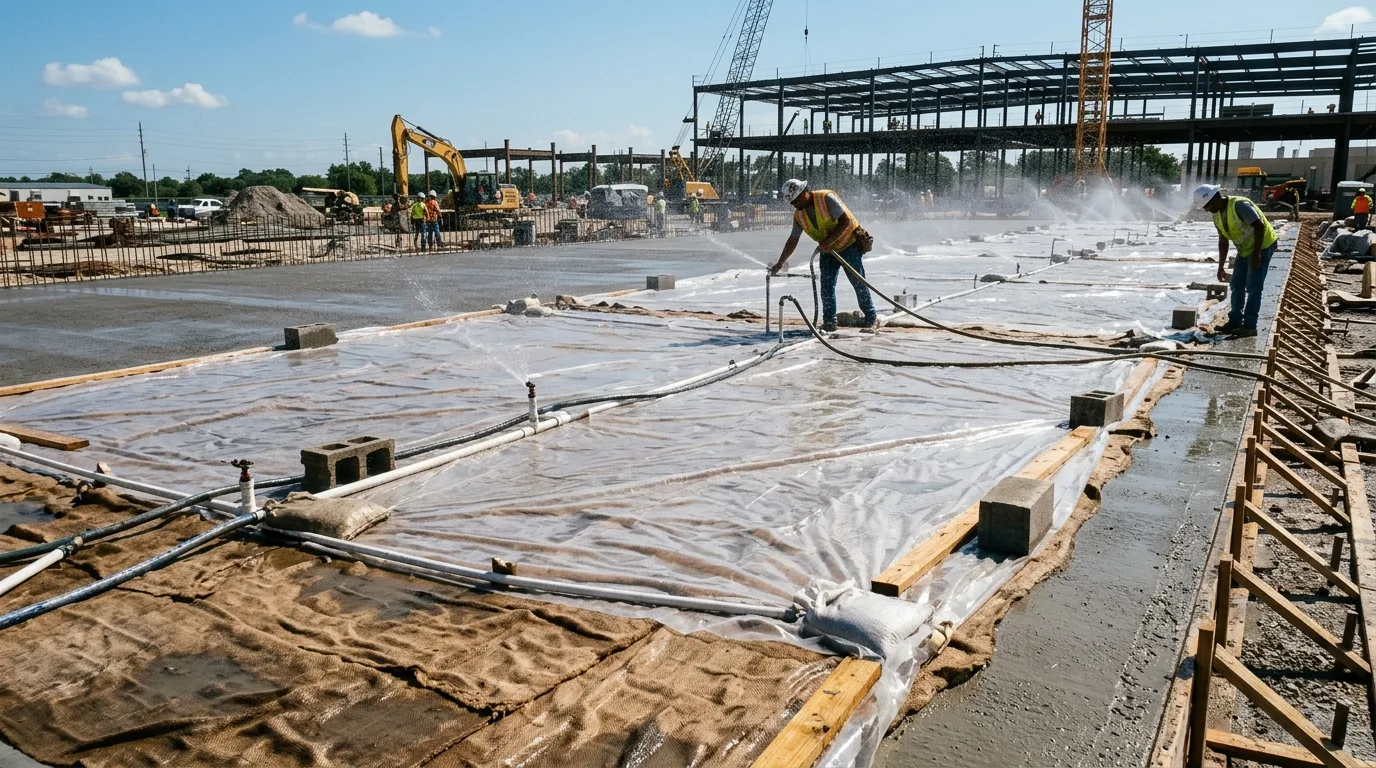
Concrete curing in Alabama is different from concrete curing in Minnesota — and the difference isn’t just temperature. Vestavia Hills’ combination of summer heat above 90°F, humidity that regularly exceeds 80%, and occasional periods of rapid atmospheric drying creates a set of curing conditions that require active management on every pour. Understanding what’s happening chemically during concrete curing helps homeowners know what to expect — and what to watch for if something goes wrong. In this post, we walk through the concrete curing timeline in Alabama’s conditions, what can accelerate or disrupt the process, and how experienced concrete contractors in Vestavia Hills manage curing for each season.
Concrete Installation in Vestavia Hills — Properly Cured Every Time
We manage curing conditions for every pour — driveways, patios, foundations, and retaining walls.
What Concrete Curing Actually Means
Curing is not drying. Fresh concrete does not harden by losing water — it hardens through a chemical reaction called hydration, in which calcium silicate compounds in Portland cement react with water to form the mineral crystals that give concrete its strength. That reaction requires moisture and proceeds over an extended period: 70% of concrete’s design strength develops in the first 7 days, 90%+ develops in 28 days, and the hydration reaction continues slowly for years after that.
The distinction matters because the most common curing mistake — removing forms or loading the concrete too early because it “looks hard” — damages concrete that hasn’t yet developed adequate strength for service. A concrete driveway in Vestavia Hills that has cured for 24 hours looks and feels solid, but its internal crystal structure is not yet strong enough for vehicle traffic.
How Alabama’s Climate Affects Concrete Curing in Vestavia Hills
Summer heat: When air temperature exceeds 90°F and concrete surface temperature is even higher (surface temps in direct July sun can reach 120°F+), moisture evaporates from the concrete surface faster than the cement paste can consume it in the hydration reaction. The result is plastic shrinkage cracking — fine cracks that appear in the first two to four hours after the pour, before the concrete even sets. These cracks are permanent and indicate incomplete hydration in the surface layer.
The practical effect on timing in Vestavia Hills: summer concrete pours must be scheduled earlier in the day, must use evaporation retarder applied immediately after screeding, and must be covered with curing blankets within the first hour after finishing. Summer pours typically need seven days of moisture retention before any foot traffic, and ten days before vehicle loads.
High humidity: Vestavia Hills’ high summer humidity actually helps the curing process by slowing surface moisture evaporation somewhat compared to hot, dry climates. The combination of heat and humidity in Alabama creates challenging but manageable conditions — the moisture is there, but the temperature drives evaporation faster than the humidity can compensate. The net effect is still faster-than-ideal surface drying in midsummer without active management.
Winter cold: Below 40°F, the hydration reaction slows dramatically. Below 32°F, water in the fresh concrete mix can freeze before hydration is complete, causing permanent damage to the internal structure. Vestavia Hills averages 44°F in January — manageable — but cold snaps below freezing occur several times each winter. Cold-weather concrete pours require heated mix water, calcium chloride accelerator, and insulated blankets during curing. The curing period extends significantly in cold weather — what takes 7 days in 70°F weather takes 14+ days at 40°F.
Wettest months: March and July bring the most rainfall in Vestavia Hills. Rain on fresh concrete is damaging — it dilutes the surface layer and disrupts the finish. We monitor weather forecasts before every pour and have contingency plans for approaching rain. If rain is predicted within four hours of a planned pour, we reschedule.
Concrete Curing Timeline for Vestavia Hills Projects
Day 1 (0–24 hours): Fresh concrete is in its most vulnerable state. The surface must not be walked on, and any rain or impact can permanently damage the finish. Curing blankets or curing compound are applied immediately after finishing. In summer, this period requires the most active evaporation management.
Days 2–7: Light foot traffic is generally acceptable by day 3–5 depending on temperature. Concrete reaches approximately 70% of design strength during this window. Curing blankets or wet curing methods (keeping the surface moist) continue to benefit strength development.
Day 7: The standard “foot traffic” milestone for residential concrete in Vestavia Hills. Vehicle use should wait until day 7 for passenger cars and day 10–14 for heavier vehicles or equipment.
Day 28: Full design strength is reached. This is the milestone that governs structural concrete decisions — foundations, retaining walls, and post-tension stressing are typically performed at or after 28 days.
Concrete Curing Managed Properly — Vestavia Hills
We set concrete traffic timelines based on pour conditions, not guesswork. Ask us for your specific cure schedule.
Practical Curing Guidelines for Vestavia Hills Homeowners
- Don’t walk on new concrete for three days minimum. Even though concrete feels hard after 24 hours, it lacks the surface strength to resist abrasion from foot traffic without marking or scuffing.
- Keep cars and equipment off for 7 days. Passenger vehicles are safe at 7 days for standard residential concrete pours in Vestavia Hills’ fall and spring conditions. Summer pours may benefit from waiting 10 days.
- Don’t seal until 28 days. Sealer applied before 28 days traps residual moisture within the slab that hasn’t yet evaporated after the hydration reaction is complete. This can cause sealer adhesion failure, hazing, and discoloration. Wait for full cure before first sealer application.
- Watch for early cracks. Hairline cracks appearing in the first 24–48 hours indicate plastic shrinkage — most commonly caused by surface moisture loss in summer heat. These cracks don’t automatically indicate a failed pour, but they should be reported to your contractor. Some may benefit from early crack filling before they widen.
Frequently Asked Questions
How long does a concrete driveway take to cure in Vestavia Hills?
Foot traffic: 3–5 days. Vehicle use: 7 days for passenger cars. Full structural strength: 28 days. In summer, add one to two extra days for each milestone due to the rapid surface moisture loss that occurs during Alabama’s peak heat. In winter, extend timelines significantly — the hydration reaction slows below 40°F and concrete may need 14+ days to reach normal 7-day strength benchmarks.
What does it mean when concrete cracks within the first week?
Cracks in the first 48 hours are typically plastic shrinkage cracks caused by surface moisture loss faster than the cement can hydrate. They indicate inadequate evaporation management during the pour. Cracks appearing in days 3–7 are typically settlement or early thermal cracks. In both cases, document the cracks (photograph) and contact your contractor immediately. Early crack treatment is far less expensive than allowing cracks to widen through subsequent wet-dry cycles in Jefferson County’s clay-soil environment.
Can I speed up concrete curing with heaters in winter?
Heaters can maintain adequate curing temperatures when outdoor temps drop below 40°F in Vestavia Hills, but they must be managed carefully. Direct heat applied unevenly to a concrete surface can cause thermal cracking. Insulated enclosures with propane or electric space heaters maintain temperature uniformly and allow normal curing to proceed in winter. We build cold-weather curing costs into winter project estimates when conditions require it.
Properly Cured Concrete for Vestavia Hills — Call (888) 376-0955
We manage curing conditions from the pour through the cure period — your concrete gets full strength development every time.
Related: