
Foundation Repair vs. Replacement: Vestavia Hills Homeowner Guide
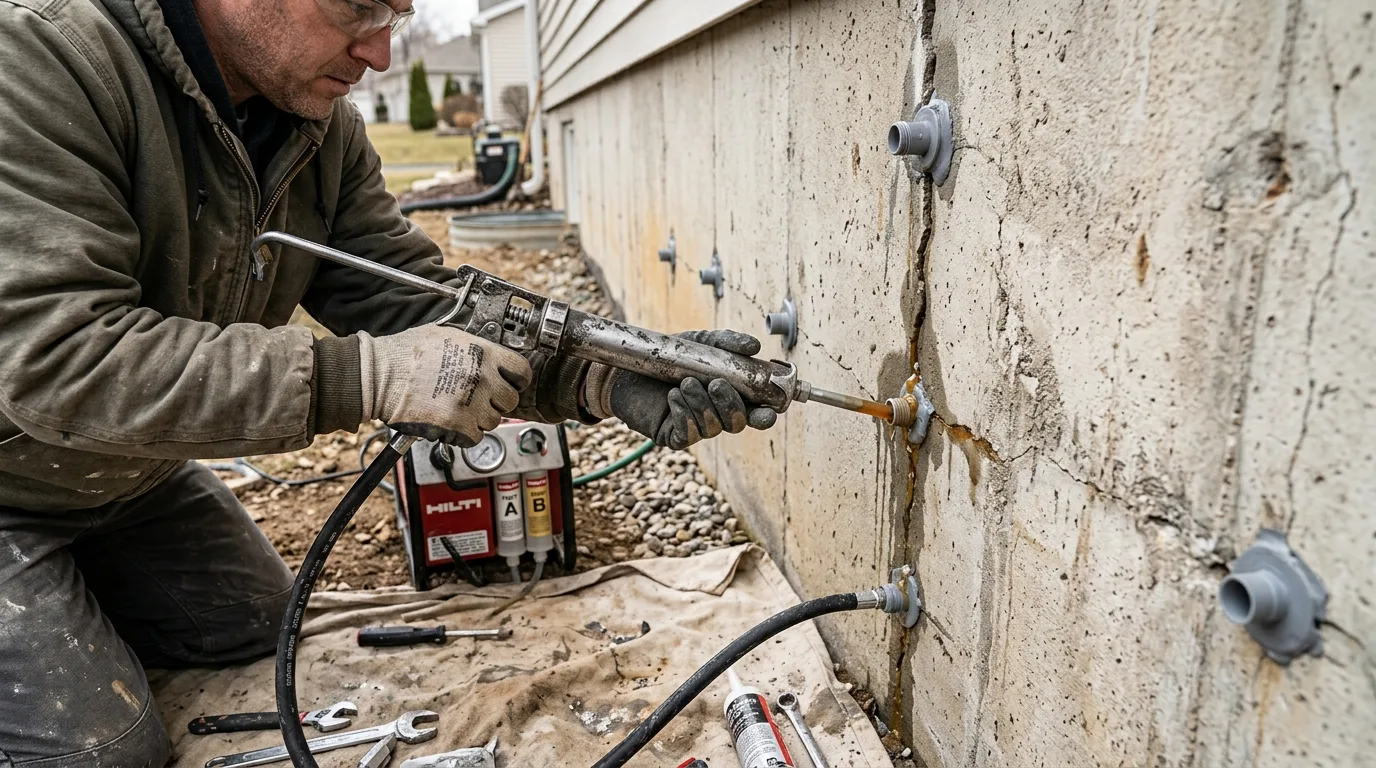
Few homeowner decisions carry more financial weight than the choice between foundation repair and foundation replacement. In Vestavia Hills, where Jefferson County’s expansive clay soils are the primary driver of most foundation problems, the decision isn’t always straightforward — and the wrong choice in either direction is expensive. In this post, we walk through the assessment process: what signs point to repair vs. replacement, what repair options are available for Vestavia Hills foundations, and what full foundation replacement on a Shades Mountain clay-soil lot involves.
Free Foundation Assessment in Vestavia Hills
We evaluate your foundation honestly — no pressure toward the more expensive option.
Understanding What Causes Foundation Problems in Vestavia Hills
Foundation problems in Vestavia Hills are overwhelmingly caused by one thing: Jefferson County’s expansive clay soils doing what they do every year. Clay expands when wet and contracts when dry, and the magnitude of that movement in Vestavia Hills depends on several site-specific factors: the clay’s mineral composition (which varies across neighborhoods like Altadena Park and Cahaba Heights), the depth and quality of the original sub-base under the foundation, and how effectively surface and subsurface drainage directs water away from the foundation perimeter.
Vestavia Hills receives approximately 55 inches of annual rainfall, with March delivering nearly six inches in a single month. Foundations that are in contact with poorly drained clay absorb the full force of each seasonal wet-dry cycle. Foundations installed with proper drainage management — gravel base, slope drainage, perimeter drainage — absorb far less movement. The difference in outcomes between these two scenarios, multiplied over 20–30 years, explains why some Vestavia Hills homes show minimal foundation movement while others in the same neighborhood have significant problems.
This cause-and-effect relationship is what determines whether repair or replacement is appropriate: if the foundation is structurally sound but the drainage that was supposed to protect it has failed, correcting the drainage is the intervention — not replacing the slab. If the foundation itself has failed structurally because of decades of inadequate drainage and clay movement, replacement with an engineered design is the answer.
Signs That Indicate Foundation Repair
Minor differential settlement with structurally sound concrete: One or two slab sections that have settled modestly, without full-depth cracking through the concrete above. If the concrete remains intact and the settlement hasn’t progressed significantly in 12–24 months, mudjacking (pumping material beneath the settled section to restore grade) can be an effective solution.
Isolated cracking with identifiable cause: A single crack or crack cluster that can be traced to a specific drainage failure or missing expansion joint. Correcting the drainage condition and repairing the crack is appropriate when the rest of the foundation shows no movement.
Settlement at perimeter only: When only the outer edge of a slab has settled — common when drainage has been inadequate at the foundation perimeter — underpinning or perimeter repair is possible without full slab replacement.
Post-tension cable damage: Individual post-tension tendons in a post-tensioned slab can be repaired or supplemented without full slab replacement in some cases, depending on the extent of damage.
Signs That Indicate Foundation Replacement
Widespread differential settlement across multiple zones: When the slab has settled in multiple independent areas — some up, some down, with different amounts of movement — the foundation can no longer function as a structural unit. Mudjacking settles each area independently but can’t restore the slab’s overall flatness or structural continuity.
Full-depth cracking throughout the slab: Cracks that go through the full four to six inch thickness of the slab at multiple locations indicate structural failure. Surface-applied repairs don’t restore structural integrity across a full-depth crack. This level of cracking requires replacement with a new foundation engineered for the site conditions.
Interior symptoms throughout the home: When foundation movement has caused: multiple sticking doors throughout the house (not just one), diagonal drywall cracks at multiple door corners, visible gaps at interior wall-ceiling junctions, or sloping floors across multiple rooms — the foundation movement is too widespread for repair to address comprehensively.
Foundation on clay without drainage: When the foundation was installed directly on native clay without gravel base or drainage design — as was common in older Vestavia Hills construction from the 1960s and 1970s — and the clay movement has been affecting the slab for 30+ years, replacement with a properly engineered post-tensioned slab is often the better long-term investment than repeated repairs on a foundation that was never designed for its soil environment.
Foundation Repair or Replacement in Vestavia Hills?
Let us assess your specific situation — we'll tell you honestly which option makes sense and why.
What Foundation Replacement Involves in Vestavia Hills
A full concrete foundation replacement in Vestavia Hills involves: demolition of the existing slab, excavation to remove the compromised sub-base material and any active clay from the bearing zone, installation of engineered fill or gravel base to the correct depth, forming and pouring a new concrete slab with post-tensioned reinforcement (the standard recommendation for Jefferson County’s clay soils), and perimeter drainage design to manage surface and subsurface water away from the new foundation.
This is the most complex and expensive concrete project type — and it’s also the one where proper engineering makes the biggest difference in long-term outcome. A post-tensioned slab replacement on an appropriately prepared sub-base with correctly designed perimeter drainage should last the life of the structure without the movement problems that drove the original replacement.
The permit process through the City of Vestavia Hills Building Safety department is most rigorous for foundation work: excavation inspection, pre-pour inspection of reinforcement, and post-pour inspection are all required. Engineer-stamped drawings may be required depending on foundation type and site conditions.
Practical Decision Framework
Ask these questions about your Vestavia Hills foundation:
- Is the concrete itself structurally intact, or are there full-depth cracks? Intact concrete can often be repaired; full-depth cracks indicate structural failure.
- Is the settlement isolated or widespread? Isolated settlement can often be addressed locally; widespread movement indicates foundation-wide failure.
- Has drainage been corrected or is it still contributing to movement? No repair holds without addressing drainage.
- How old is the foundation and what type is it? Standard rebar slabs on clay soils over 30 years old with no drainage history warrant a replacement conversation.
Frequently Asked Questions
How much does foundation repair cost vs. replacement in Vestavia Hills?
Repair options (mudjacking, crack repair, underpinning) typically run $1,500–$8,000 depending on scope. Full foundation replacement in Vestavia Hills starts at $5–$10 per square foot for concrete work, plus excavation, drainage design, and engineering — typically $15,000–$40,000+ for a full home foundation. The cost comparison must include longevity: a repair that lasts five years before reoccurring is more expensive over a 20-year period than a replacement that lasts the life of the structure.
Does homeowner’s insurance cover foundation replacement in Alabama?
Most standard homeowner’s insurance policies in Alabama exclude foundation damage caused by gradual soil movement — which is the most common cause in Jefferson County. Sudden and accidental damage (a burst pipe causing foundation saturation, for example) may be covered. Check your specific policy and consult with your insurance agent. We can provide detailed written assessments that document the cause and extent of damage for insurance submissions.
Should I get a structural engineer’s report before repairing my Vestavia Hills foundation?
For significant foundation problems — widespread settlement, multiple full-depth cracks, or major interior symptoms — a structural engineer’s assessment is a worthwhile investment before committing to any repair approach. An engineer’s report provides independent documentation of the cause and recommended remedy, which is valuable for insurance purposes, future home sales, and ensuring you’re investing in the right solution. We work with structural engineers in Jefferson County regularly and can provide referrals.
Vestavia Hills Foundation Repair & Replacement — Honest Assessment
Call (888) 376-0955 for a free site evaluation. We'll tell you what your foundation actually needs.
Related: